
On December 23, 2025, the management team of Medical Benefit Insurance was invited to the Department of Neurosurgery, Affiliated Hospital of Northwest University (Xi'an No.3 Hospital), where they successfully held a special departmental lecture on surgical risk management. Focusing on the core demand for surgical risk prevention and control, this lecture aimed to enhance the attention of medical staff and patients in the department to potential surgical risks through professional empowerment. Meanwhile, it systematically introduced the application value of the company's risk testimony equipment and terminals, providing support for building a safer medical service environment.
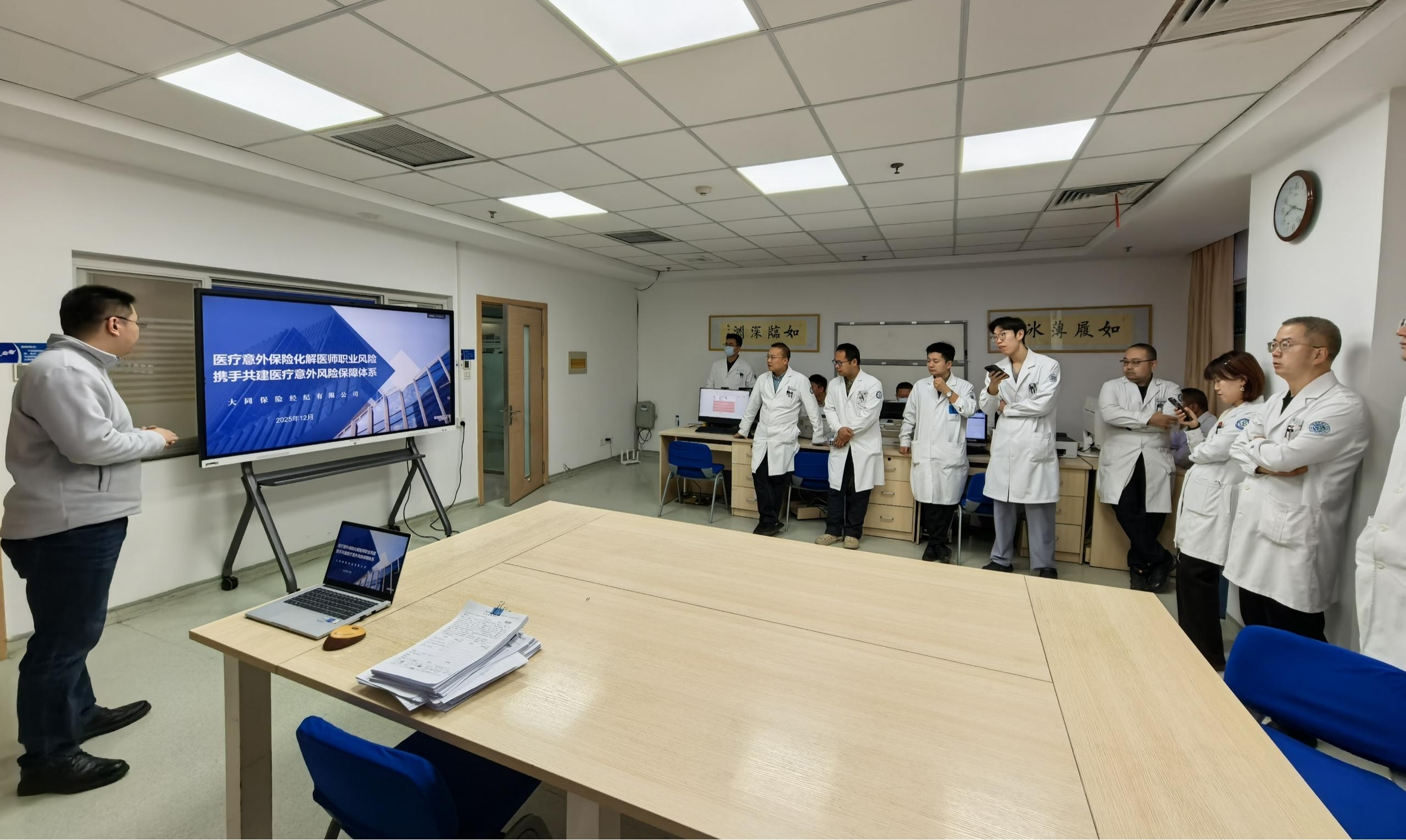
Neurosurgical operations are characterized by high difficulty and high risk in the industry. Various potential risks during surgical procedures are not only related to patients' treatment outcomes but also impose strict requirements on the clinical operation standards of medical staff. Addressing this clinical pain point, the management team of Medical Benefit Insurance, drawing on rich experience in medical risk management and control, conducted an in-depth analysis of the identification key points and prevention logic of common surgical risks in neurosurgery from the perspectives of industry policy orientation and clinical practice cases.
During the lecture, the team focused on elaborating the company's service model in the field of auxiliary medical risk management and control, and detailed how to help the department improve the risk early warning mechanism through professional collaboration: on one hand, through preoperative risk popularization and doctor-patient communication assistance, it helps patients understand surgical risks more clearly and enhances doctor-patient consensus; on the other hand, it provides suggestions for optimizing risk prevention and control processes for medical staff, strengthening the comprehensiveness and standardization of preoperative risk assessment.
Regarding the core functions of the risk testimony equipment and terminals, the lecture team conducted intuitive demonstrations and interpretations. Relying on digital technology, this set of equipment and terminals can realize functions such as standardized recording of key surgical links and real-time tracking of risk nodes. It not only provides objective data support for surgical risk prevention and control but also offers authoritative testimony materials in subsequent risk dispute handling, effectively reducing the risk of doctor-patient disputes. On-site medical staff conducted in-depth exchanges with the lecture team on issues such as equipment operation procedures and data security guarantees, and highly recognized the clinical application value of the equipment.
The successful holding of this special lecture has built a professional cooperation bridge between enterprises and medical institutions. In the future, Medical Benefit Insurance will continue to deepen its efforts in the field of medical risk management and control, relying on professional service capabilities and digital tools to provide personalized risk management and control solutions for more medical institutions, helping to improve the safety level of medical services and build a harmonious doctor-patient relationship.